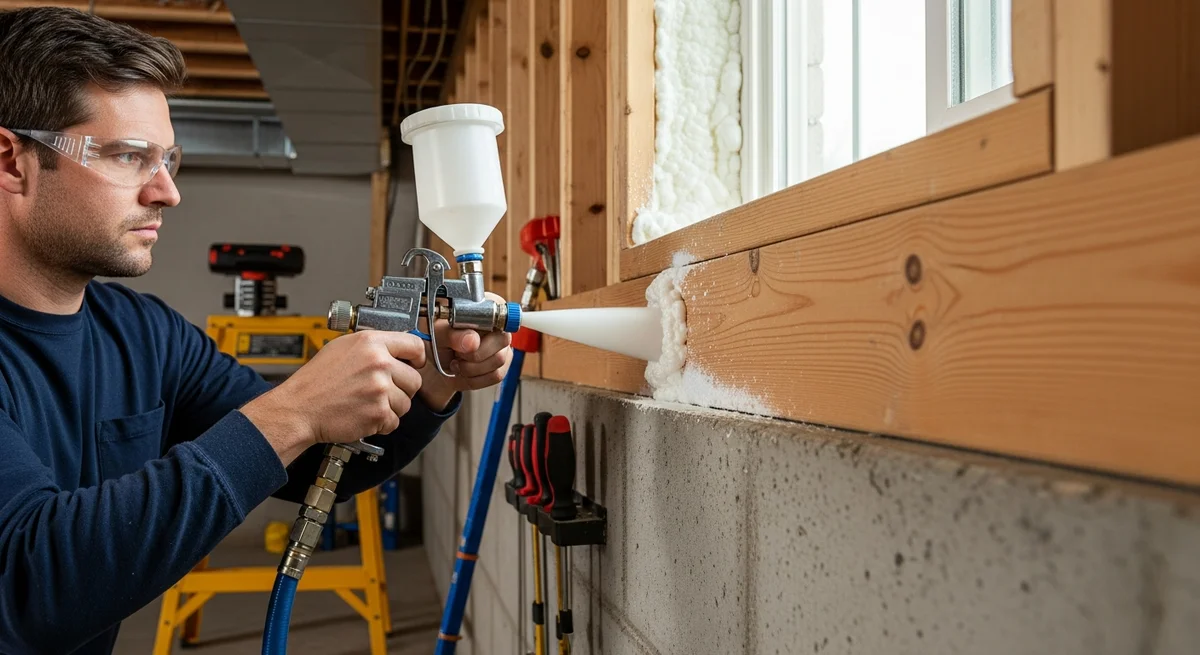
Not every home needs a complete insulation overhaul. Sometimes the biggest comfort improvements come from small, targeted fixes that address specific problem areas.
These spray foam insulation small jobs can transform how your home feels without requiring a major investment. The trick is knowing which small projects actually matter and which ones are not worth the effort.
Let us walk through the best small spray foam applications, what they cost, and how to know if they make sense for your situation.
What Counts as a "Small Job"
A small spray foam job is not defined by square footage. It is defined by scope and purpose. These are targeted applications that address specific comfort or efficiency problems rather than whole-house insulation projects.
Common small jobs include:
- Rim joist sealing around your home's perimeter
- Attic hatch or pull-down stair insulation
- Knee wall air sealing in bonus rooms
- Garage ceiling edges where conditioned space meets unconditioned
- Gaps around plumbing and electrical penetrations
- Window and door rough openings
These projects typically take a few hours rather than a full day, cost hundreds rather than thousands, and deliver noticeable results almost immediately.
Top Small-Job Areas Homeowners Feel Immediately
Some small spray foam applications deliver comfort improvements you will notice within days. Here are the most impactful ones:
Rim Joists
The rim joist is the single most overlooked air leakage spot in most homes. This is the band of wood around your foundation where the floor framing meets the foundation wall. In a typical home, rim joist air leakage accounts for up to 30% of total infiltration.
After foam sealing the rim joists, homeowners commonly report that their first floor no longer feels drafty and their basement stays warmer in winter. It is one of those fixes that makes you wonder why you did not do it sooner.
Bonus Room Edges
Bonus rooms over garages are notorious for being too hot in summer and too cold in winter. The problem is usually air leakage at the edges where the bonus room floor meets exterior walls or unconditioned space.
Targeted spray foam at these edges can transform a bonus room from uncomfortable to livable. The fix is invisible once complete, but the temperature difference is obvious.
Garage Ceiling Where It Meets Living Space
If you have living space above your garage, the perimeter of that ceiling is a common weak point. Cold air from the garage migrates up through gaps and makes the room above uncomfortable.
Foaming the edges and any penetrations through the garage ceiling creates a tight seal that keeps conditioned air where it belongs.
Attic Hatch
Your attic access is basically a hole in your ceiling. Even with weatherstripping, most attic hatches leak air. Foam sealing around the frame and adding an insulated cover can eliminate a surprising amount of heat loss.
This is especially noticeable if your attic hatch is in a hallway or room you use frequently. No more cold drafts from above.
Knee Walls
Knee walls are the short walls in rooms with sloped ceilings, like finished attics or cape cod second floors. Behind these walls is usually unconditioned attic space, and air flows freely through gaps and penetrations.
Foam sealing at the top and bottom plates of knee walls, plus any electrical or plumbing penetrations, dramatically reduces air exchange with the cold attic space.
Thickness and R-Value in Plain English
When contractors talk about spray foam insulation thickness and R-value, it can get confusing fast. Here is what you actually need to know for small projects:
More Is Not Always Better
For most small jobs, 2 to 3 inches of closed-cell spray foam is plenty. This gives you R-12 to R-21 (closed-cell foam delivers about R-6 to R-7 per inch).
The goal with small jobs is usually air sealing plus adequate thermal resistance. You do not need R-49 in your rim joist. You need it sealed tight and reasonably insulated.
Right Depth Depends on the Spot
Different applications have different requirements:
- Rim joists: 2 inches of closed-cell is typically sufficient for air sealing and thermal performance
- Attic hatch: 3 to 4 inches minimum since it faces directly into unconditioned attic space
- Knee walls: 2 to 3 inches on the attic side for air sealing
- Penetrations: Fill the gap completely, usually 1 to 2 inches
For more detailed information on foam performance specifications, our R-value, thickness, and fire rating guide covers everything you need to know.
Small Jobs That Are NOT Worth It
Honesty builds trust, so let us talk about small spray foam applications that usually do not make sense:
Foaming Individual Electrical Outlets
You have probably seen those outlet insulation kits at the hardware store. The truth is, outlet air leakage is usually a symptom of bigger problems in the wall cavity. Foam pads behind the outlet cover do almost nothing. If your outlets feel drafty, the real issue is elsewhere.
Spot-Treating Random Wall Areas
Spray foam in one section of a wall while leaving the rest untreated rarely makes sense. Air will just bypass the treated area. Wall insulation works best when done comprehensively.
Foaming Around Windows Without Addressing the Real Problem
Drafty windows might need new weatherstripping, not spray foam. If the window frame was not properly insulated during installation, foam can help. But if the glass is the issue, foam around the frame will not fix it.
Very Small Gaps You Could Caulk Instead
For gaps under a quarter inch, caulk works fine and costs less. Spray foam is overkill for tiny cracks. Save it for larger gaps and cavities where foam expands to fill the space properly.
How to Prep Your Home (Fast Checklist)
Small spray foam projects are quick, but a little preparation makes them go smoother:
- Clear access: Move stored items away from work areas in basements, attics, or garages
- Protect belongings: Cover anything you want to keep clean with drop cloths
- Plan for pets and kids: Keep them away from work areas during application and for a few hours after
- Check ventilation: Open a window or run a fan in adjacent spaces if needed
- Make access easy: Clear a path for the crew to bring in equipment
Most small jobs take just a few hours. You can usually go about your day normally while work is being done.
Frequently Asked Questions
What counts as a small spray foam job?
Small jobs typically include rim joists, attic hatches, knee walls, bonus room edges, and garage ceiling gaps. These are targeted applications rather than whole-house insulation projects.
How thick should spray foam be for small projects?
For most small jobs, 2 to 3 inches of closed-cell foam provides excellent results. This delivers R-12 to R-21 depending on the foam type. Thicker is not always better because the goal is air sealing plus adequate thermal resistance.
Can I do small spray foam jobs myself?
While DIY spray foam kits exist, professional installation delivers better results for most projects. Professionals have proper equipment, safety gear, and experience to apply foam at the right thickness and coverage.
How much do small spray foam projects cost?
Small spray foam projects typically range from $300 to $1,500 depending on the area being treated. Rim joist foaming for a typical home costs $800 to $1,200. Attic hatch sealing is usually $150 to $300.
Will I notice a difference from a small spray foam job?
Yes. Targeted spray foam applications often produce noticeable comfort improvements within days. Cold floors, drafty rooms, and temperature variations typically improve immediately after rim joist or attic hatch treatment.
Get a Quick Quote for Your Small Project
Not sure if your project qualifies as "small" or what it might cost? We are happy to take a look and give you a straight answer.
Many small projects can be quoted over the phone with photos, and most can be completed in a single visit.