Your attic might be the most important room in your house when it comes to energy bills. In Maryland, where we deal with humid summers and cold winters, Maryland attic insulation can make the difference between a comfortable home and one that feels like a sauna in July or an icebox in January.
DMV Foam works with homeowners throughout Maryland, from Baltimore row houses to Montgomery County colonials, and the attic is almost always where we find the biggest opportunities for improvement. This guide covers what you need to know before tackling an attic insulation project: the options, the process, and what to expect on installation day.
Whether you are dealing with sky-high BGE bills, rooms that never seem the right temperature, or just want to make your home more efficient, understanding your attic insulation options is the first step.
Why Attic Insulation Matters Most in Maryland Homes
Heat moves toward cold. In winter, your heated indoor air rises and pushes against your attic floor, trying to escape into the cold attic space above. In summer, your roof absorbs sunlight and can hit temperatures over 150 degrees, radiating heat down into your living space.
Maryland summers bring humidity that makes 85 degrees feel like 95. Maryland winters drop into the 20s and teens, with occasional cold snaps pushing below zero. Your attic is the front line for both battles.
Here is why Maryland attic insulation upgrades deliver such noticeable results:
- Up to 25% of home energy loss happens through the attic in poorly insulated homes
- Summer cooling costs drop significantly when attic heat gain is reduced
- Winter heating stays where it belongs instead of leaking through the ceiling
- Comfort improves in rooms below the attic, especially second floors
- HVAC equipment lasts longer when it is not working overtime
The Department of Energy estimates that proper attic insulation can save 10 to 50% on heating and cooling costs, depending on your starting point. For a deep dive into real savings numbers, check our energy savings guide for DC area homes.
What "Attic Insulation" Can Mean (Attic Floor vs Roofline)
When contractors talk about attic insulation, they might mean two very different things. Understanding the difference matters because it affects cost, performance, and what makes sense for your home.
Option 1: Insulating the Attic Floor
This is the traditional approach. Insulation goes on top of your ceiling, between and over the floor joists in the attic. The attic itself stays unconditioned, meaning it is not heated or cooled.
Best for homes where:
- The attic is only used for light storage
- HVAC equipment and ductwork are NOT in the attic
- Budget is a primary concern (usually less expensive)
- Existing roof ventilation is adequate
Option 2: Insulating the Roofline (Underside of Roof Deck)
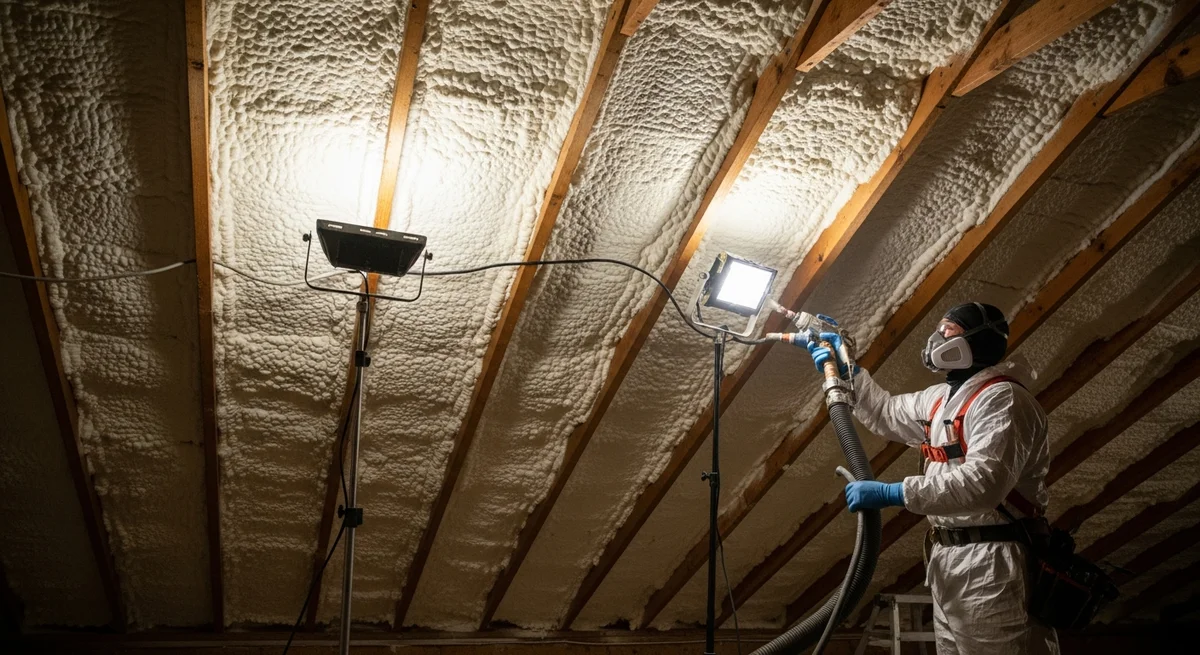
Spray foam is applied directly to the underside of the roof decking, turning the attic into conditioned space. The attic becomes part of your home's thermal envelope.
Best for homes where:
- HVAC equipment or ductwork is located in the attic
- You want to convert attic space to living area
- The home has a complex roofline with difficult floor access
- Ice dams are a recurring problem
- Maximum energy efficiency is the goal
Many Maryland homes have furnaces, air handlers, or ductwork in the attic. When that equipment sits in unconditioned space during a 120-degree summer day, it works much harder. Moving the thermal boundary to the roofline protects that equipment and improves efficiency dramatically.
Where Spray Foam Fits: Closed Cell vs Other Options
Spray foam has become the go-to choice for many Maryland attic insulation projects, but it is not the only option. Here is how different insulation types compare for attic applications:
| Insulation Type | R-Value Per Inch | Air Sealing | Best Attic Application |
|---|---|---|---|
| Closed Cell Spray Foam | R-6 to R-7 | Excellent | Roof deck, tight spaces |
| Open Cell Spray Foam | R-3.5 to R-3.8 | Excellent | Roof deck (with vapor retarder) |
| Blown Cellulose | R-3.2 to R-3.8 | Poor | Attic floor coverage |
| Fiberglass Batts | R-3.0 to R-3.7 | Poor | Attic floor (joist cavities) |
The closed cell spray foam insulation R-value advantage becomes clear in the numbers. At R-6.5 per inch, closed cell foam delivers more insulation in less thickness than any other common option. This matters when space is limited or when you need to meet code requirements without excessive buildup.
But R-value is only part of the story. Spray on closed cell foam insulation also creates a complete air barrier, stopping the drafts and air leakage that traditional insulation cannot address. For many homes, the air sealing benefit is more valuable than the R-value advantage.
Learn more about how closed cell foam performs in our detailed R-value and thickness guide.
How Thick Is Spray Foam Insulation in Attics (What to Expect)
Understanding how thick is spray foam insulation in attic applications helps you evaluate quotes and set realistic expectations.
For closed cell spray foam in Maryland attics:
- Roof deck applications: 3 to 5 inches is common, providing R-20 to R-35
- Attic floor applications: 4 to 6 inches for R-26 to R-40
- Hybrid approach: 2 to 3 inches of closed cell for air sealing, topped with blown insulation to reach R-49
Maryland code typically requires R-49 for attic insulation. Reaching that with closed cell foam alone would require about 7.5 inches, which gets expensive. The hybrid approach (foam for air sealing plus blown insulation for depth) often delivers better value while still meeting or exceeding code.
Foam is applied in "lifts" of about 2 inches per pass. This allows each layer to cure properly before the next is applied. Trying to spray too thick at once causes overheating that can damage the foam. A 6-inch final thickness typically means three passes with curing time between them.
For more details on our attic services, visit our attic insulation service page.
Spray Foam Insulation From Exterior: When It Is Possible (and When It Is Not)
Some homeowners ask about spray foam insulation from exterior applications, especially when they hear about above-deck insulation or exterior rigid foam. Here is the reality:
When exterior spray foam is possible:
- During complete roof replacement: When the old roofing and decking are removed, foam can be applied on top of the sheathing before new roofing is installed
- New construction: Builders can incorporate exterior foam into the roofing system from the start
- Major renovations: Projects that involve stripping the roof to the rafters
When exterior spray foam is not practical:
- Retrofit insulation projects: Removing functional roofing just to apply exterior foam is rarely cost-effective
- Existing roofs in good condition: The expense of roof removal outweighs insulation benefits
- Most residential upgrades: Interior application is faster, cheaper, and equally effective
For most Maryland homeowners upgrading an existing home, interior spray foam application to the underside of the roof deck delivers the same thermal performance at a fraction of the cost. We only recommend exterior approaches when a roof replacement is already planned.
If you are curious about different insulation strategies, our complete guide to spray foam vs fiberglass covers the options in detail.
Spray On Closed Cell Foam Insulation: Prep and Install Day Expectations
Knowing what happens during a spray on closed cell foam insulation project helps you prepare and eliminates surprises. Here is what a typical Maryland attic project looks like:
Before Installation Day
- Clear the attic: Remove stored items, especially anything heat-sensitive or valuable
- Protect belongings: The crew will use plastic sheeting, but clearing the area is still important
- HVAC check: Make sure your system is working; you will need it after the crew leaves
- Pet and family plans: Everyone (including pets) should stay away from the work area during application
Installation Day Timeline
Morning arrival: Crew arrives with spray rig (a large trailer with heated chemical tanks and hoses). Setup takes 30 to 60 minutes.
Work area prep: Plastic sheeting protects non-work areas. HVAC vents in the attic are covered to prevent overspray.
Foam application: Actual spraying depends on project size. Most residential attics take 2 to 6 hours of active spraying time.
Curing period: After application, the foam needs time to cure. Light odor is normal during this period. Most manufacturers recommend staying out of the space for 2 to 24 hours, depending on the product and ventilation.
Cleanup and walkthrough: The crew removes plastic, cleans up equipment, and walks you through the finished work.
What to Expect After Installation
- Slight odor for 24 to 48 hours: Normal and clears with ventilation
- Foam texture: Surface may look bumpy or uneven; this is cosmetic and does not affect performance
- Temperature difference: Many homeowners notice comfort improvements the same day
Safety is a priority. Learn more in our spray foam safety guide for families and pets.
Common Attic Problems to Fix Before Insulating
Spray foam can solve many problems, but some issues need attention before insulation goes in:
Roof Leaks or Moisture Problems
Foam over a leaky roof traps moisture where it cannot dry. Any active leaks or water stains should be investigated and repaired first. A quality contractor will inspect for moisture issues before starting work.
Bathroom Fan Venting
Bathroom exhaust fans should vent to the exterior, not into the attic. Dumping humid air into an insulated attic creates mold and moisture problems. Verify all vents terminate outside before foam is applied.
Mold or Mildew
Existing mold needs professional remediation before insulation. Covering mold with foam does not kill it and can make the problem worse. If you see black or green discoloration on roof sheathing, address it first.
Recessed Lighting Gaps
Older recessed lights (can lights) often have gaps around them that leak air. Some older fixtures are not rated for insulation contact (IC rating). These need to be replaced or properly sealed before foam installation.
Old Insulation Removal
In some cases, old fiberglass or cellulose should be removed before spray foam is applied. This adds cost but is necessary when existing insulation is contaminated, compressed, or interferes with proper foam adhesion.
How to Choose the Right Contractor for Maryland Attic Insulation
The quality of your Maryland attic insulation depends as much on the installer as the materials. Here is what to look for:
Contractor Checklist
- Thorough inspection: A good contractor inspects before quoting, not just measures and estimates
- Clear scope of work: Written proposal should specify foam type, thickness, R-value, and covered areas
- Ventilation plan: How will they handle attic ventilation changes? (Sealing the roof deck changes ventilation needs)
- Cleanup plan: Who removes overspray, plastic, and debris?
- Before and after photos: Documentation of the work for your records
- Warranty information: Both manufacturer product warranty and contractor workmanship warranty
- MHIC license: Required for contractors working in Maryland
- Insurance verification: General liability and workers compensation coverage
Questions to Ask
- How many attic projects have you completed in this area?
- What foam manufacturer do you use, and are you certified by them?
- How will this affect my attic ventilation?
- What is the re-entry time after application?
- Can you provide references from recent attic projects?
DMV Foam inspects first, then recommends the right approach based on your specific situation. We explain the options clearly and let you decide what fits your goals and budget. For more on what sets professional installers apart, see our guide to avoiding common insulation mistakes.
Frequently Asked Questions
What is the best approach for Maryland attic insulation: attic floor or roofline?
It depends on your situation. If the attic is just storage with no HVAC equipment, insulating the floor is usually more cost-effective. If ductwork or equipment is up there, or you want conditioned space, the roofline approach works better.
Can spray foam insulation from exterior be done without replacing the roof?
Rarely. Exterior applications require accessing the roof surface, which means removing shingles and decking. This is only practical during a full roof replacement or major renovation project.
How thick is spray foam insulation typically applied in attics?
Closed cell foam on roof decks usually runs 3 to 5 inches. Attic floors might get 4 to 6 inches. Many projects use a hybrid approach with 2 to 3 inches of foam plus blown insulation to reach R-49 at lower cost.
Is spray on closed cell foam insulation safe once cured?
Yes. Fully cured closed cell foam (usually 24 hours) is chemically inert and safe. During installation and initial curing, proper ventilation is important, and occupants should stay clear of the work area.
Does closed cell spray foam insulation R-value matter more than air sealing?
Both matter, but air sealing often has a bigger immediate impact. The good news is spray foam does both at once. You get high R-value plus complete air sealing in one application, which is why the comfort improvement feels dramatic.
Schedule Your Maryland Attic Insulation Evaluation
We inspect first, then recommend the right approach. Get clear options and pricing for your specific attic situation.
Call us at (571) 977-8247
Request an Evaluation