Attic Insulation in Northern Virginia — Spray Foam, Blown-In & Air Sealing
Northern Virginia's Climate Zone 4A demands R-49 attic floors and thoughtful air sealing. We bring 16+ years of NoVA attic expertise to every home in Falls Church, Fairfax, Arlington, Reston, and beyond.
Free Attic Assessment
Schedule Inspection
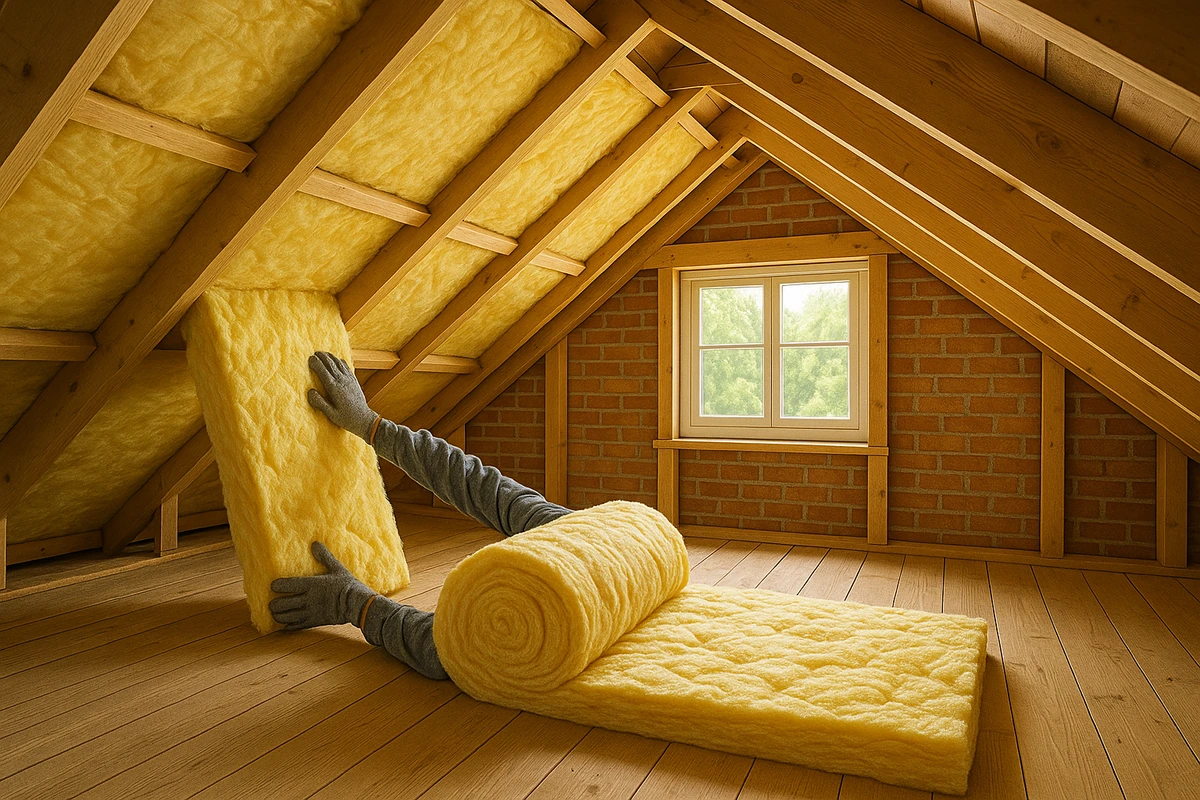
Northern Virginia's Attic Challenge
An attic in Northern Virginia faces a climate challenge from both directions. In summer, roof surface temperatures reach 140–160°F and radiate heat downward, driving attic air temperatures above 130°F. If your HVAC unit or ducts are located in this space — as they are in the majority of 1980s–2000s NoVA ranch homes, Cape Cods, and split-levels — that equipment is working against 130°F air instead of the 75°F it was designed for. Efficiency drops 20–40%.
In winter, the same under-insulated attic lets conditioned heat escape upward, creating the temperature gradient that forms ice dams at your eaves during Northern Virginia's freeze-thaw cycles. Falls Church, Arlington, and McLean homes with complex rooflines (dormers, multiple valleys) are particularly susceptible.
The 2021 Virginia Residential Code — enforced in Fairfax County, Arlington County, Prince William County, and Loudoun County — requires R-49 in attic floors for new construction in Climate Zone 4A. Most existing NoVA homes have R-11 to R-30, installed when original energy codes allowed it. Bringing those homes up to current standard is the single most impactful energy upgrade most Northern Virginia homeowners can make.

Three Attic Strategies — Which Is Right for Your Home?
Vented Attic — Blown-In Insulation
Best for: Standard vented attics without HVAC equipment in the attic space.
Blown-in cellulose or fiberglass installed on the attic floor, on top of existing insulation or on the clean deck after air sealing. Reaches R-49 in about 14–16 inches. Air sealing of can lights, plumbing penetrations, and attic hatch before blowing is critical — insulation without air sealing leaves significant energy on the table.
Virginia code: R-49 minimum for Climate Zone 4A attic floors (2021 VRC Table R402.1.2).
2026 cost range: $1,800–$3,500 for a 1,000–1,500 sq ft footprint including air sealing.
Unvented Attic — Spray Foam at Roof Deck
Best for: Homes with HVAC equipment or ductwork in the attic. Complex rooflines where proper venting is impractical.
Closed-cell spray foam applied directly to the underside of the roof deck, bringing the attic inside the conditioned building envelope. HVAC and ducts now operate in conditioned space — efficiency improves 20–40% and equipment lasts longer. Also eliminates the heat-flux path that drives ice dam formation at eaves.
Virginia code: 2021 VRC Section R806.5 permits unvented assemblies with spray foam meeting R-value requirements.
2026 cost range: $4,000–$7,500 for a 1,000–1,500 sq ft footprint.
Air Sealing + Blown-In (Best Value)
Best for: Vented attics that have some existing insulation but poor air sealing — very common in 1980s–1990s Northern Virginia subdivisions.
Comprehensive air sealing of every penetration (can lights, plumbing stacks, top plates, attic hatch) followed by blown-in cellulose or fiberglass to reach R-49. Proper air sealing typically reduces heating and cooling costs more than adding insulation alone. This combination is the standard recommendation for Falls Church, Fairfax, and Annandale homes built before 2000.
2026 cost range: $2,200–$4,500 for a 1,200–2,000 sq ft footprint.
Air Sealing: The Step Most Contractors Skip
Insulation slows heat transfer by conduction. Air sealing stops heat transfer by convection — the movement of air through gaps and penetrations. In a typical Northern Virginia home from the 1980s, the attic floor has dozens of penetrations: recessed can lights (each one a significant air leak), plumbing stacks, electrical chases, top-plate gaps, and an often poorly sealed attic hatch.
Adding R-38 of blown-in cellulose to an attic with poor air sealing captures about 60–70% of the available energy benefit. Adding the same insulation after comprehensive air sealing captures 90–95%. The marginal cost of air sealing relative to insulation alone is $400–$1,200 for most homes. The marginal energy savings it enables are roughly the same magnitude as the insulation itself.
Our process: before any insulation is installed, we seal every penetration with appropriate materials — two-part spray foam for large gaps, caulk for small cracks, rigid foam board for large open chases. We test air tightness before and after when requested.
What It Costs in Northern Virginia (2026)
Northern Virginia insulation costs run 15–20% above national averages due to labor markets and building density. Here are typical DMV Foam project ranges:
- Blown-in cellulose to R-49, 1,200 sq ft floor, with air sealing: $2,200–$3,500
- Same scope, 2,000 sq ft floor: $3,000–$4,800
- Spray foam at roof deck (unvented), 1,200 sq ft: $4,200–$6,500
- Spray foam cathedral ceiling per 1,000 sq ft (finished rafter bays): $3,500–$5,500
- Air sealing only (no added insulation), average NoVA home: $800–$2,000
Expected Savings
Northern Virginia homeowners with under-insulated attics typically see 15–30% reduction in annual heating and cooling costs after upgrading to R-49 with proper air sealing. For a home with $2,400/year in HVAC operating costs, that is $360–$720 per year in savings — a 5–8 year payback at current gas and electric rates. Homes with HVAC in the attic that are converted to unvented assemblies often see 25–40% reduction.

Attic Insulation in Your City
We serve the full Northern Virginia and Washington DC metro region. Find your city for locally-specific information on permits, costs, and housing stock.
Frequently Asked Questions
What R-value does my attic need in Northern Virginia?
Northern Virginia falls in ASHRAE Climate Zone 4A. The 2021 Virginia Residential Code — enforced in Fairfax County, Arlington County, Prince William County, and Loudoun County — requires R-49 in attic floors (the insulation layer above the living space in a vented attic). That is roughly 14–16 inches of blown-in cellulose or fiberglass, or about 5–7 inches of closed-cell spray foam.
Many existing NoVA homes have only R-11 to R-30 from original construction — well below current code minimum. For cathedral ceilings (insulation in rafter bays), the requirement is R-38. We always measure and report your current R-value during the free attic assessment.
Should I use spray foam or blown-in insulation in my Northern Virginia attic?
It depends on whether your attic is vented or unvented, and whether HVAC equipment is located in the attic space. For vented attics with insulation on the attic floor: blown-in cellulose or fiberglass is the cost-effective standard — at $1.50–$2.50 per sq ft installed, you reach R-49 for a fraction of spray foam cost.
For unvented (conditioned) attic assemblies — where you want HVAC and ductwork inside the building envelope — closed-cell spray foam applied directly to the roof deck is the correct approach. This is common in Northern Virginia homes where the HVAC unit is in the attic: bringing it inside conditioned space eliminates duct losses and significantly extends equipment life.
How much does attic insulation cost in Northern Virginia?
2026 cost ranges in the Northern Virginia market:
- Blown-in cellulose or fiberglass to R-49, 1,200 sq ft floor with air sealing: $2,200–$3,500
- Same scope, 2,000 sq ft floor: $3,000–$4,800
- Spray foam at roof deck for unvented conditioned attic, 1,200 sq ft: $4,200–$6,500
- Air sealing only (no new insulation): $800–$2,000
All estimates are free, written, and provided before any work begins. No surprises.
What is an unvented attic and is it right for my home?
A vented attic keeps the attic space outside the building envelope — insulation goes on the attic floor and the attic breathes through ridge and soffit vents. An unvented (conditioned) attic brings the entire attic inside the building envelope — insulation goes on the roof deck and the space is sealed.
Unvented attics are the right choice when: (1) HVAC equipment or ductwork is in the attic (very common in 1980s–2000s NoVA ranch and Cape Cod homes), (2) you need to prevent ice dams by keeping the roof deck warmer, or (3) your complex roofline makes proper venting difficult. The 2021 VRC Section R806.5 allows unvented attics with spray foam meeting R-49 requirements for Zone 4A.
Do ice dams form in Northern Virginia and can attic insulation prevent them?
Yes. While Northern Virginia does not get the prolonged sub-zero temperatures of New England, the freeze-thaw cycles characteristic of Climate Zone 4A — temperatures oscillating around freezing multiple times per winter — create ideal conditions for ice dams. Ice dams form when heat escaping through an under-insulated attic melts snow on the upper roof, which refreezes at the cold eaves.
Proper attic insulation (R-49 at the attic floor with air sealing for vented attics, or spray foam at the roof deck for unvented) eliminates the heat-escape path that drives ice dam formation. Arlington and McLean homes with complex rooflines and multiple dormers benefit most from the spray foam unvented approach.
How often should I update or add to my attic insulation?
Spray foam applied to a clean, stable substrate lasts the life of the building — typically 80+ years. Blown-in cellulose or fiberglass settles about 10–15% in the first year and then stabilizes; it does not need replacement but may need topping off if it has settled below the R-49 minimum.
A practical rule: inspect your attic insulation every 10 years, or any time you have significant roof work, notice rising energy bills, or experience ice dam problems. Many Northern Virginia homes from the 1970s and 1980s have R-11 to R-19 — two to four times below the current code minimum. Adding blown-in on top of existing insulation is straightforward and does not require removing old material.
Related Resources
→ 2026 Cost Guide: Attic Insulation in Northern Virginia
→ Why Attic Insulation is the Best Investment for NoVA Homes
→ Attic Insulation in Arlington VA: Row Houses, Condos & Capes
→ Spray Foam vs Cellulose: Which Is Right for Your Attic?
→ Attic Insulation in Alexandria, VA
→ Attic Insulation in Fairfax, VA
→ Attic Insulation Service Overview